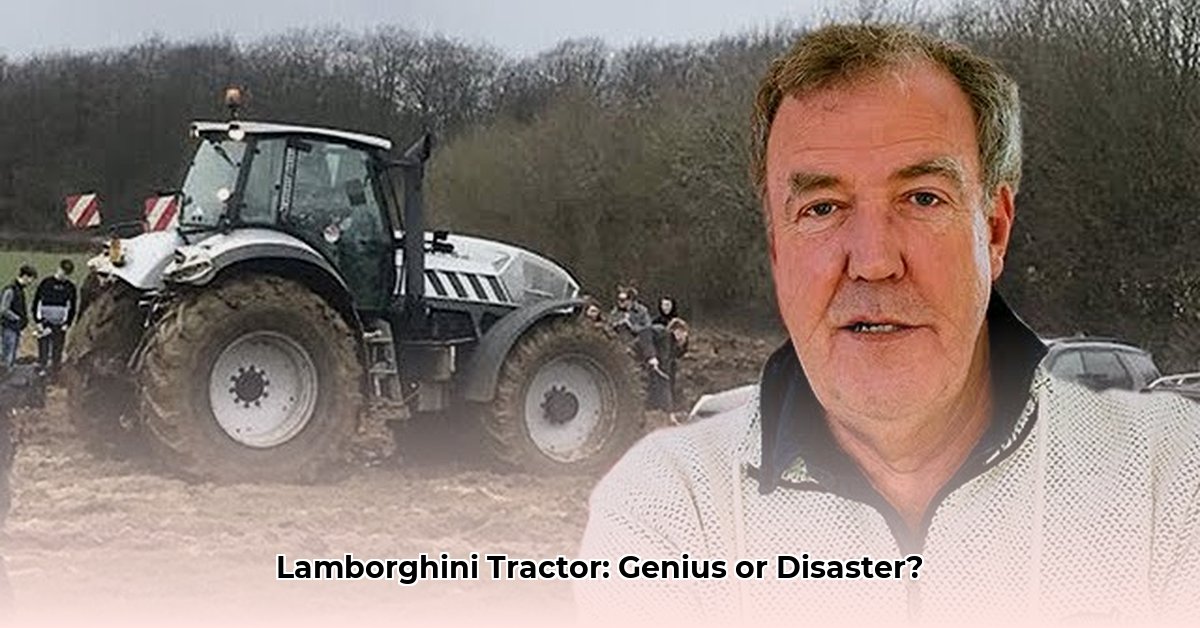
Jeremy Clarkson, the man who once drove a car through a field (allegedly), traded four wheels for four… much larger wheels. His foray into farming involved purchasing a Lamborghini tractor, an expensive, powerful machine promising agricultural dominance. The reality, however, proved considerably less glamorous. This case study examines Clarkson’s experience, highlighting the pitfalls of choosing high-spec equipment without considering the practical realities of farm operations. It's a cautionary tale, disguised as a hilariously relatable farming anecdote. For more on this specific Lamborghini tractor model, see this page.
The Allure of the Green Behemoth
The Lamborghini tractor Clarkson acquired wasn't your average garden variety machine. It boasted a formidable 269bhp and a torque figure of 775 lb ft – enough to make most cars' engines whimper in comparison. Forty gears! The sheer power, combined with the prestigious Lamborghini badge, conjured images of effortlessly plowed fields and a supremely efficient farming operation. Initial appearances suggested agricultural efficiency reborn. But was this reality or a cleverly marketed illusion?
When Reality Bites Back Harder Than a Bull
Clarkson's dream soon turned into a costly nightmare. The tractor's sheer size – a ten-ton behemoth – was the first major obstacle. His farm, not designed for such a large machine, required significant modifications. The barn needed enlarging; the driveway became a constant source of worry. This was an expensive, and frankly, inconvenient reality check.
The incompatibility issues were just as problematic. The Lamborghini's hitch system clashed with Clarkson’s existing equipment. What should have been simple tasks turned into complex, time-consuming, and expensive headaches. The Italian stallion refused to play nice with the existing farm machinery.
And then there was the cost. The initial £40,000 purchase price was merely the tip of the iceberg. Maintenance, repairs, and the sourcing of specialized parts proved unexpectedly expensive. This unexpected financial burden quickly transformed what started as a manageable investment into a potential financial drain.
The High-Tech Farming Tightrope: Weighing the Pros and Cons
Clarkson's experience isn't just amusing; it serves as a valuable lesson. His Lamborghini tractor venture underscores the crucial need of a thorough needs assessment before purchasing high-tech machinery.
- Power vs. Practicality: While high horsepower promises efficiency, it’s crucial to match it to the size and needs of the farm. Over-engineering can lead to greater cost and inefficiency.
- Compatibility Concerns: Investing in high-powered equipment without considering compatibility with current tools can lead to immediate and frustrating operational difficulties. This can ultimately cost more than the equipment savings.
- Hidden Costs: Beyond the initial purchase price, the long-term expenses of maintenance, repairs, and specialized parts must be meticulously factored into the decision-making process.
Key Lessons: Planning for Success, Not Just Glamour
Clarkson's misadventure offers valuable actionable insights:
- Needs Assessment: Before making any major equipment purchase, meticulously assess your farm's needs. A high-powered machine may be overkill for smaller operations.
- Compatibility: Verify compatibility with existing equipment. Compatibility issues cause unnecessary expense and delay.
- Cost-Benefit Analysis: Evaluate long-term costs (maintenance, repairs, parts) against potential productivity increases. Don't let initial glamour cloud sound financial judgment.
- Appropriate Technology: Select equipment appropriate for your farm's size and workload. A sledgehammer is not ideal for cracking a nut, and a Lamborghini tractor may be too much for a smaller farm.
Beyond Clarkson's Tractor: The Future of Farming Tech
While innovative agricultural technology offers potential efficiency gains, Clarkson's case highlights the critical need for careful planning and pragmatic decision-making. His experience is not a dismissal of technological advancements but a strong reminder of the importance of thorough assessment and realistic expectations. The right tools, appropriately selected, are crucial, and “bigger” doesn't always translate to “better.”
“Clarkson's Lamborghini tractor wasn’t just a farm fail; it was a valuable lesson in agricultural economics,” says Dr. Emily Carter, Agricultural Engineering Professor at Cornell University. "It underscores the importance of matching technology to scale and necessity.” The focus should be on sensible investments that align with the unique needs of a farm, not on impressive marketing.
The right equipment, properly selected, is paramount. Choosing wisely over impulsively buying expensive machinery is the real key to farming success.